Sunday, November 16, 2014

Thailand

We arrived in Chiang Mai, Thailand a few days prior to the Festival of Lights. We had planned our trip around the festival after hearing that it is one of the most spectacular events in Asia. In the days before the festival started, we wandered from Wat to Wat (temple to temple.) There are over 300 temples in Chaing Mai, and its impossible to keep them straight. The oldest of the temples dates back to the 13th century. Sunday night we went to the night market and sampled some local dishes. Our favorite dish quickly became Kho Soi, or Chang Mai Curry. Different than most curries, Kho Soi is seasoned like a thai curry with coconut milk, chicken, and egg noodles. A night bazaar is open every day and we checked out the scene for dinner a few times.

Feeling a little drained in the temple scene, we decided to visit the Number #2 attraction on Trip Advisor for Chaing Mai: Catmosphere. The spectacle is a cat filled cafe of friendly kitties and picture snapping Asian tourists. Catmosphere claims to be the first “space cat cafe.” Wow. People really think of everything. Before the woman will open the front door, you are required to sanitize your hands and remove your shoes. Inside the cafe, the coffees are served in huge mason jars and cats run around playing and being cute employees. It's a happening place. We played with kitties until Lauren's allergies caught up.

Our little guesthouse had two white fluffy dogs, Tiger and Mitzy. Both of these lucky pups have their poofy curls meticulously blow dried by the owner of our guesthouse. Another culture shock.

Our Asian massage addiction continues in Chaing Mai, Thailand! Brian had a Traditional Thai Massage that involved a lot of crazy stretching and strange positions to work out the kinks. Lauren had a more relaxing oil massage. Afterwards, we had a delicious cup of pandanus tea. We tried some pandanus tea in Bali and didn't really like it, but this tea was fantastic and we even purchased some on the way out. Two days later... same massages, different massage spa. There are much worse things to be addicted to... Unfortunately, I think we are going to have some sticker shock when we return to the States.

The Festival of Lights was a memorable three days of lanterns floating into the heavens, and candle lit floats illuminating the river. The residents of Chiang Mai do a wonderful job illuminating their city with hanging lanterns and candles. A parade of traditionally dressed young people on floats marches through the city every evening of the festival. We went to the water and launched a krathong down the river. Krathong are made from artistically designed floating organic materials ranging from banana plants to bread. Launching of a krathong is supposed to represent letting go of negative thoughts and dismissing bad luck. Khom loy are sky lanterns that are released in the temples to celebrate Yi Peng and the full moon. The spectacle is beautiful and all around the city people light lanterns and float them off into the sky. We each released a fish into the river to give us good fishing fortune for next year.

After a few hours a night the hustle of the festival had us seeking a calmer atmosphere. We found the perfect retreat to be our balcony at the guesthouse. It became our routine to pick up a few beers at the 711 down the street and sit on the balcony watching the hundreds of lanterns float in the sky. The khom loi reach incredible heights and sometimes cause troubles for aircraft in the area.

After the festival, we hopped a minivan north. Pai is a little town nestled into the hills of Northern Thailand. We found a clean and simple bungalow a short walk outside of the city, complete with a nice porch and hammock. The mosquitoes in Pai look like dragons and are gigantic. Strange bird calls and crickets made afternoons reading in the hammock not just relaxing, but fun. Daily visits to the Art of Chai were an excellent way to start the day.

We rented a motorbike for two days to explore the area's temples, waterfalls, and countryside. The hills and good roads make for a nice drive. In the evenings we walked into town for the local night market that had food and handicraft stands. Pai was a nice relaxing stop after the excitement of Chiang Mai.

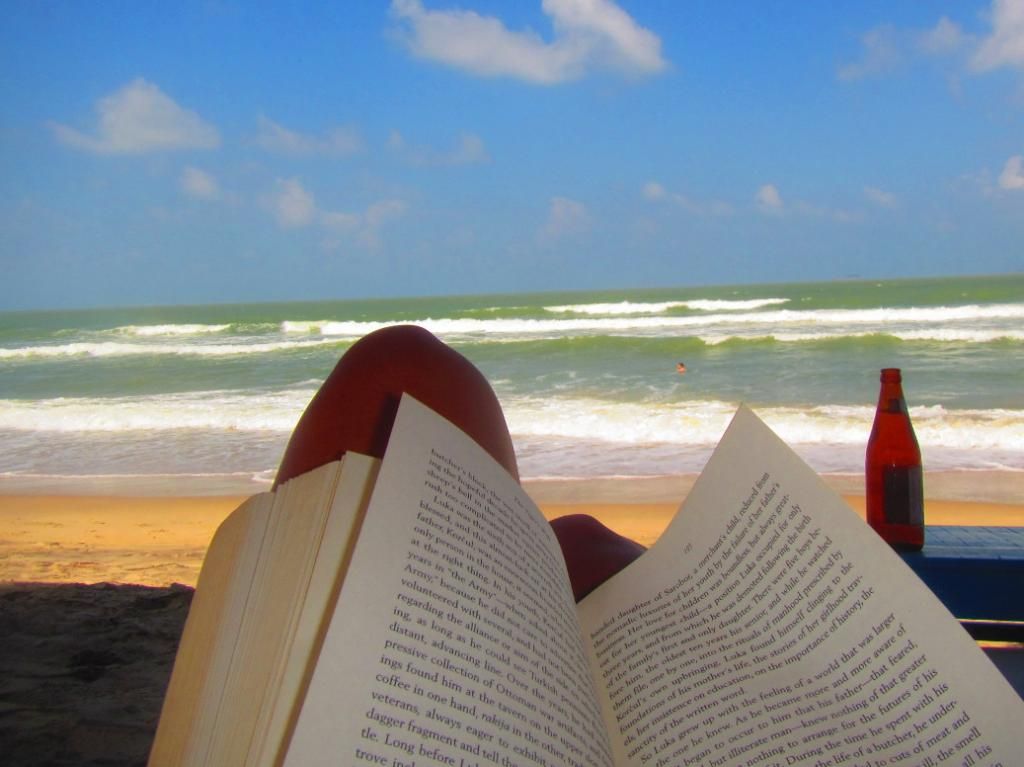
After a day of night bus, train combo travel we made it to the peninsula of Thailand and the town of Prachuap Khiri Khan. Seeing the peninsula was top of our list when we arrived in Thailand, but unfortunately the past two months have been the rainy season and the area gets slammed with rain. At the tail end of the rainy season we had perfect weather for scooting, checking out beaches, and pool time. Saving this area for the end of the trip worked out well, but we wish there was more time since there are so many nice beaches and coastal communities. Prachuap Khiri Khan is where the Japanese invaded Thailand in 1941 and the best beach is on the Thai Royal Air Force Base. We smiled at security and scooted right through the checkpoint. Tall rocky islands off the coast rise high up out of the turquoise water. Our hotel near the beach had a nice pool, which was perfect for afternoon reading and a beer. The recognizable scent of the salty breeze was rejuvenating for both of us.

The monkeys in Prachuap Khiri Khan are seriously intimidating, but seem to stick to the wooded areas around the temples. No signs of monkeys at our hotel, but plenty of warnings warnings for us not to mess around if we bumped into them around town. We saw one monkey enjoying a (most likely stolen) lunch on the beach. We approached to take a picture, but couldn't help notice his huge fangs. Brian tried to visit Wat Thammikaram on top of a hill that has great views of the bay, but was deterred by monkeys that outnumbered him 500/1.

We took a train back to Bangkok and spent a few days trying re familiarize ourselves with city life. Tonight is our last night in Asia. After a 28 hour plane ride we will finally be back to the comforts of home and the people we love.


Sunday, November 9, 2014

Laos

Laos! Our first landlocked country! We read online that the 24 hour bus ride from Sapa, Vietnam to Luang Prabang, Loas is commonly known as the “bus ride to hell.” At the time we decided to bus ($40) rather than fly ($180), we thought these reviews were a little dramatic. Now we are able to officially verify that the ride from Sapa to Luang Prabang is most certainly the “bus ride to hell.” Fortunately, winding through the mountains of Laos is absolutely beautiful.

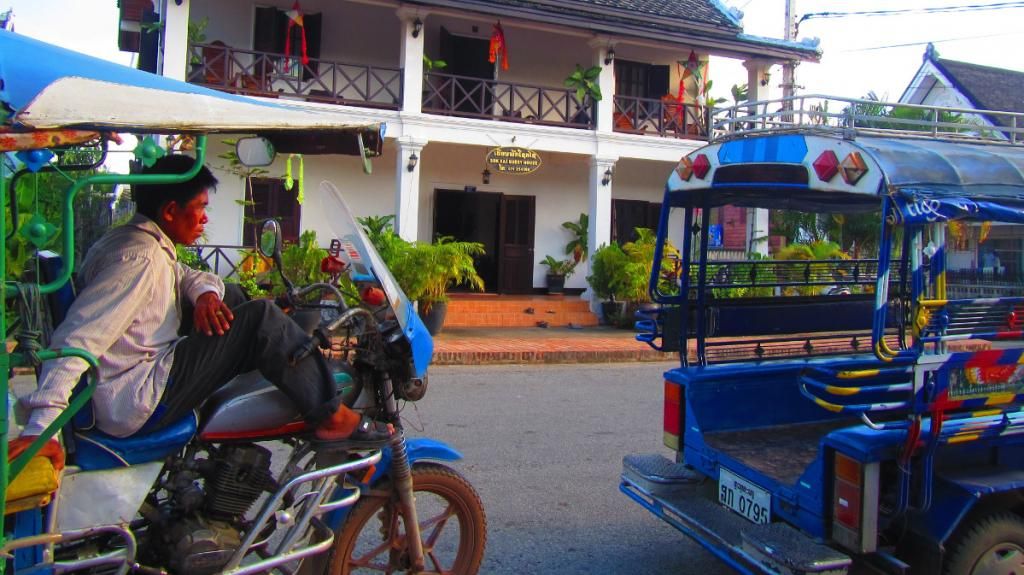
What was supposed to be a 24 hour ride turned into a 33 hour ride. Our driver, “Pinkie” was wheeling, dealing, cheating and scamming in every little town we drove through. He managed to pack our 15 seat bus to the brim with 25 people, car parts, clothing, and food to take across the border. We are assuming there is some monetary incentive to move goods this way. At the middle of nowhere border crossing, Pinkie insisted that the white people (three female travelers and us) had not purchased tickets. More than likely he had found more crap to put in the bus, which was just totally packed. Somehow Brian managed to talk him out of this great idea. The roads in Vietnam and Loas are more like dirt paths. The rickety bus pounded and pounded similar to a sailboat in a storm. After 33 hours of riding around with boxes packed to the roof (and tied to the roof!), Pinkie lovingly dumped us off in a parking lot outside the city at 3am. Luang Prabang has a midnight curfew and after searching for someone awake, we got lucky and found a room ($12/night) that included tea, coffee, and all you can eat bananas.

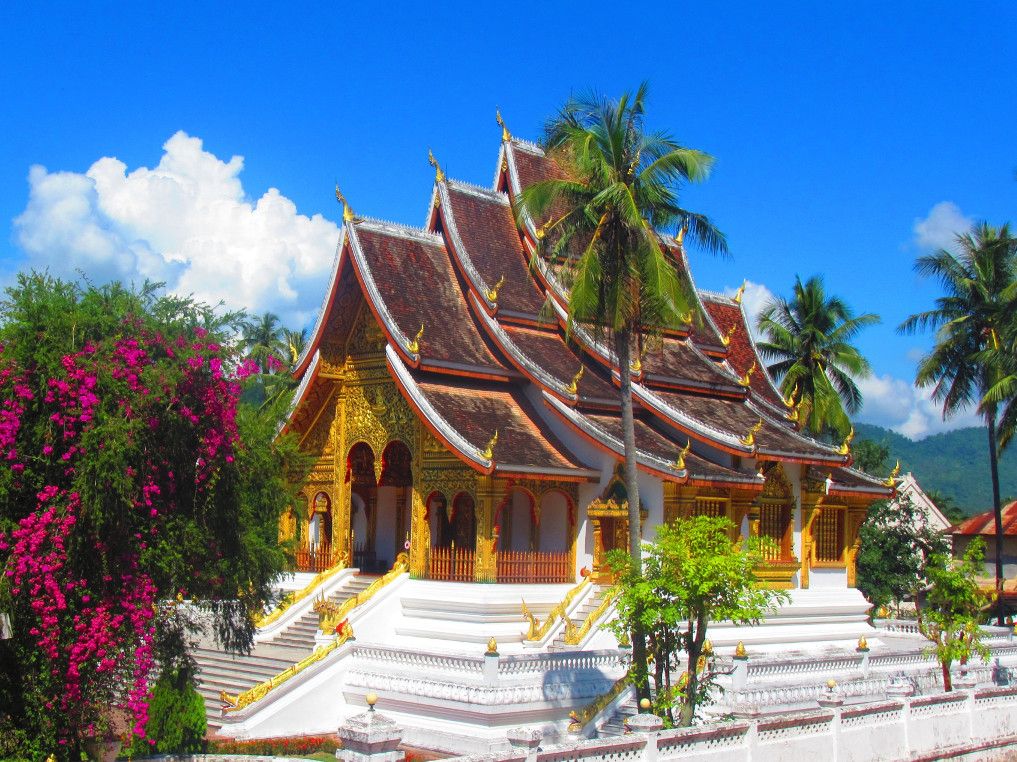
We spent a morning at L'etranger Books and Tea, a used bookstore cafe. The breakfast was delicious and so was the chai tea. Wifi was strong and we were able to catch up with some things back home. Another cool spot we ate was a candlelit restaurant on a wooden platform looking out over the river called, Utopia. Romantic mood lighting, pillows on the floor, and great bruchetta made this a fun atmosphere. The night market features an extensive array of local handicrafts and $1 stirfry. We found a lady selling hand stitched children's books that were adorable. Stands around the night market served baguette sandwhiches and fresh squeezed juice for quick snacks.

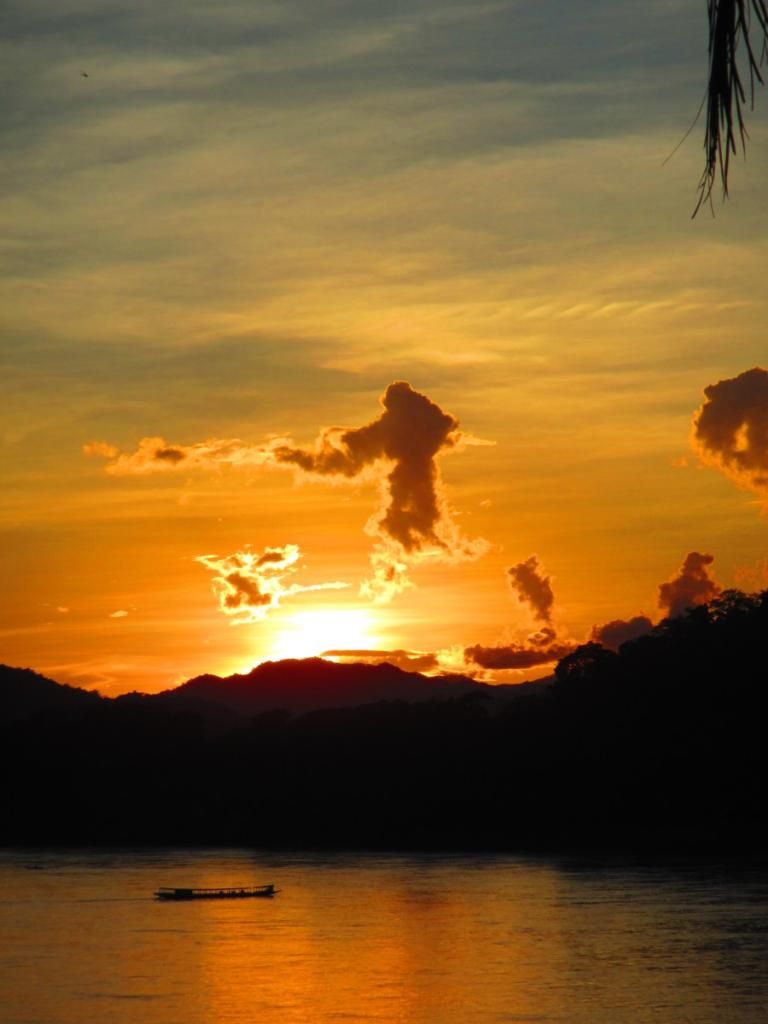
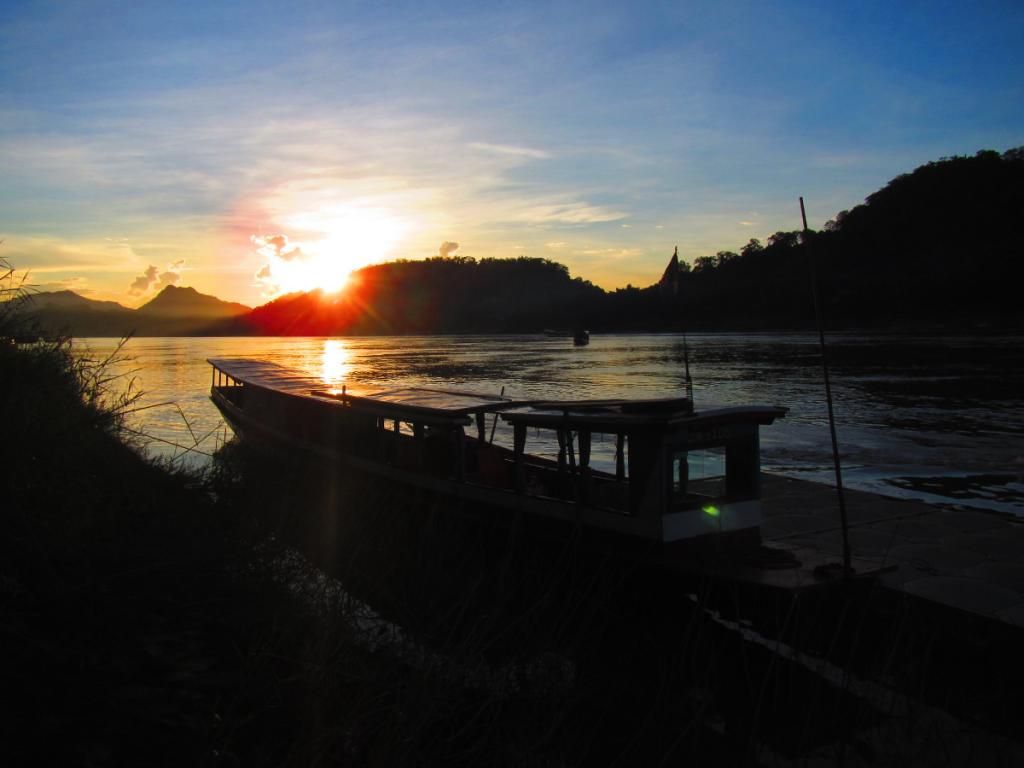
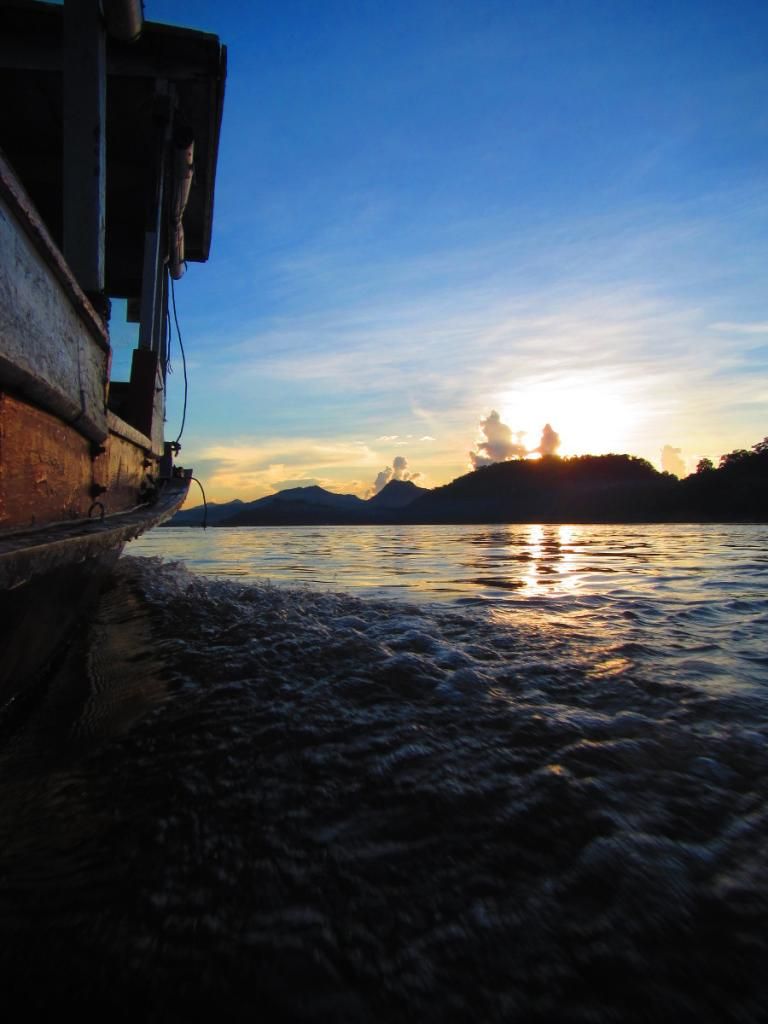
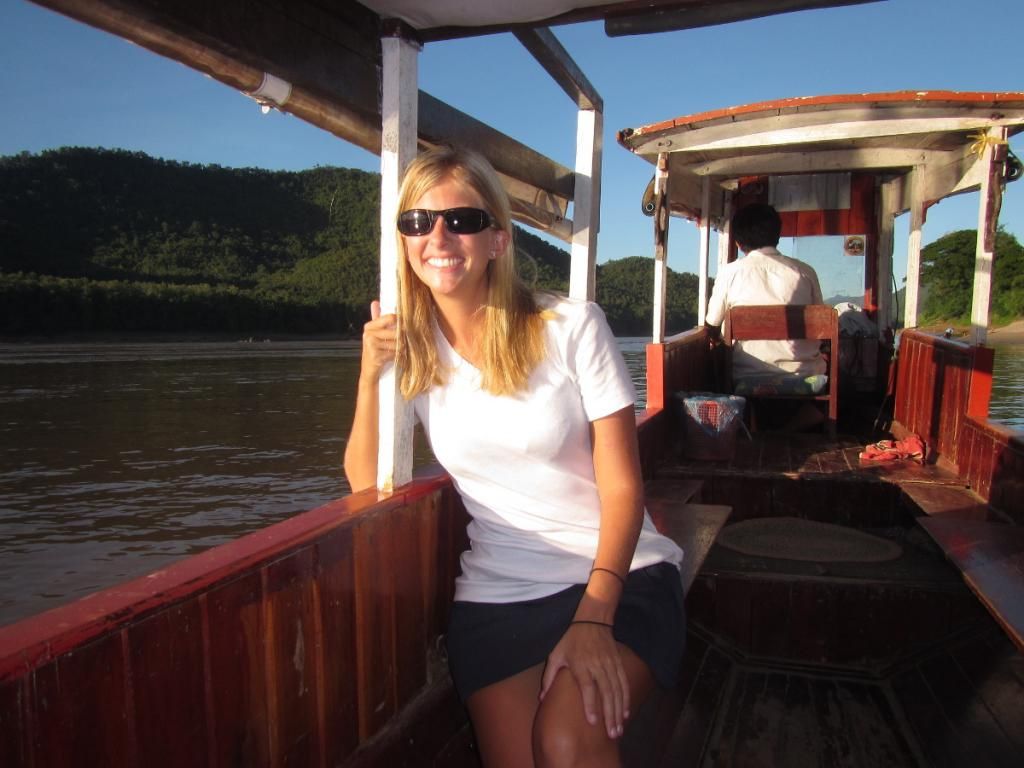
We found a guy willing to take us out on his boat at sunset. The Mekong River has the most unique sunsets that we've seen. Golden waters and silhouetted mountains makes for a perfect Asian sunset cruise. A little early for the sunset, Brian even took a dip in the Mekong River.

For the most part, Loas is a very poor country with a third of the population living under the poverty line. Luang Prabang is one of the larger cities, but still feels like a small walkable town. Laos sells hydropower to neighboring countries and the Chinese are starting to come in and build roads in exchange for Laos's minerals and timber. Deforestation is starting to become an issue, but from what we saw, the environment is lush. Healthcare is coming to Laos, but the average lifespan for men is still only 60 years old.

We were super excited to reunite for dinner with a couple who we met in Cambodia, Amber and Ben. While we traveled the coast in Vietnam, Amber and Ben went North through Cambodia and Laos. It was really fun to get together and exchange our experiences in Asia. From toilets to tuk-tuk drivers, and puppy kabobs to bartering fails, we had a fun evening and a lot of laughs. We look forward to keeping in touch and following their India travels. While there are several day trips to touristy spots you can take from Luang Prabang, we spent our days relaxing, getting massaged, and contemplating where to watch the sunset (and listening to the new Taylor Swift Album.)

The day before leaving Laos, Lauren started to feel very sick with a fever, upset stomach, and dizzyness. In about an hour she went from having a beer on the river to being super sick. If a doctor had been readily available, we would have been there. We stopped in a pharmacy and the pharmacist skype called another pharmacist with her symptoms . After a really rough night, the cocktail of antibiotics, pedialyte, and probiotics seemed to help and we were able to go to the airport and make our flight from Luang Prabang to Chaing Mai, Thailand.

Laos Air is actually really nice and the clean comfortable plane was only half full. During our accent, the plane weaved in and out of mountains and riverbeds. Unfortunately, 20 minutes after take off, the plane experienced technical issues and had to return to Luang Prabang. They put us on another plan quickly and we were back in the air, this time with free lunch, drinks, and even beer.

Thailand is our 15th and final destination. We are looking forward to Chaing Mai and celebrating the annual Festival of Lights!


Monday, November 3, 2014

Vietnam (Part 2)

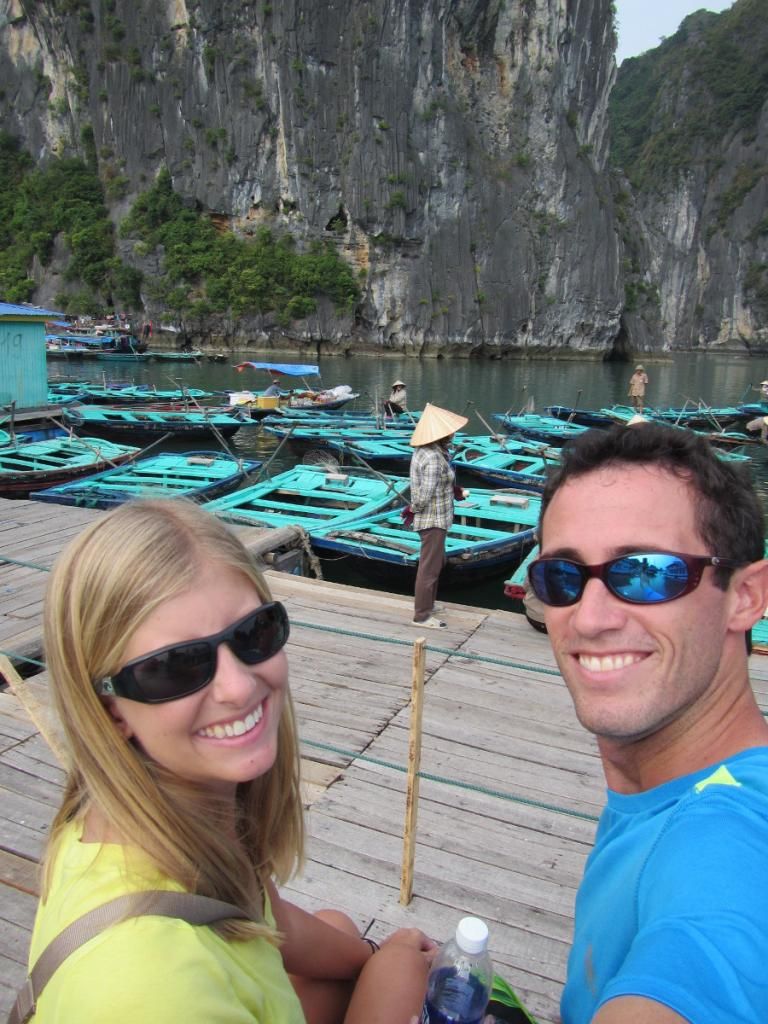
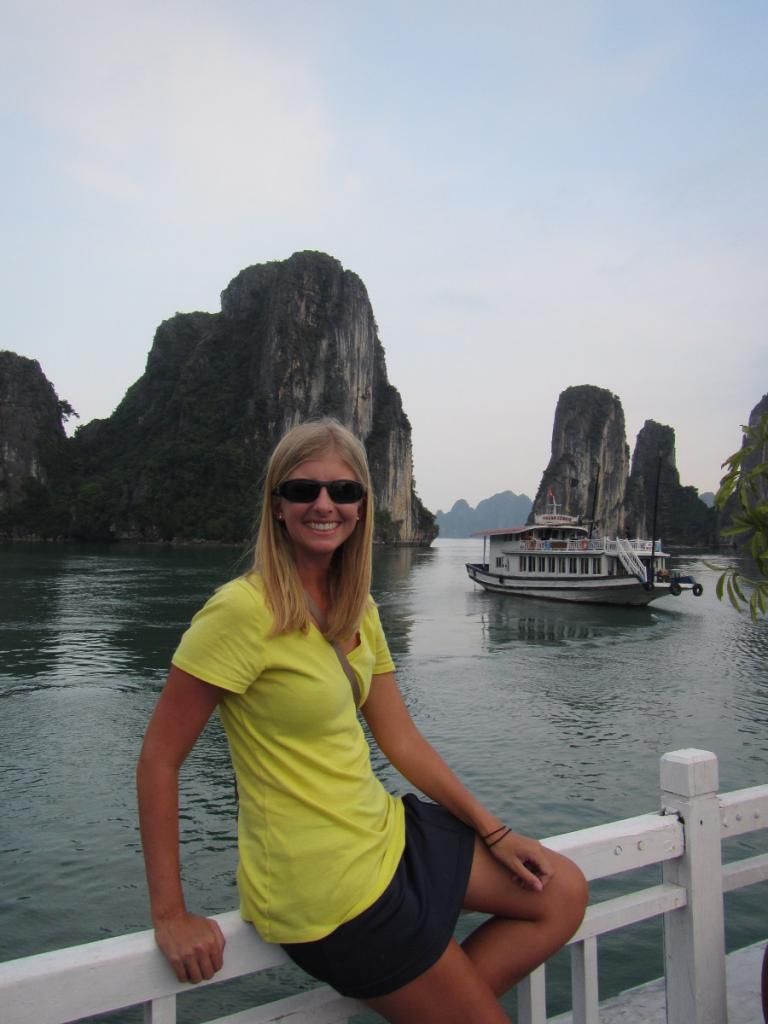
We flew from Hoi An to Hanoi ($36) and transferred via city bus to big bus station for Halong Bay. Next time we will take a cab rather than a city bus, which was totally packed. The driver even charged us extra for our bag. Luckily we had the help of a student who personally walked us to the correct bus and got us pointed in the right direction. Halong Bay is located on Vietnam's coast, about 5 hours east of Hanoi. Halong Bay has just short of 2,000 natural limestone karsts that rise high and vertical above the bay. These karsts are scattered with caves, beaches, and lakes. The rock formations reminded us of the Lao Islands in Fiji. It took us a morning to filter through the scams and find a boat that would take us out on the water. The rickety old wooden “junk” boats in Halong Bay depart with visitors on day and overnight cruises. The captain of our junk boat casually sipped tea while we bopped around the bay. Luckily we had good weather and we able to see the karsts in the bay and enjoy a little sunshine.

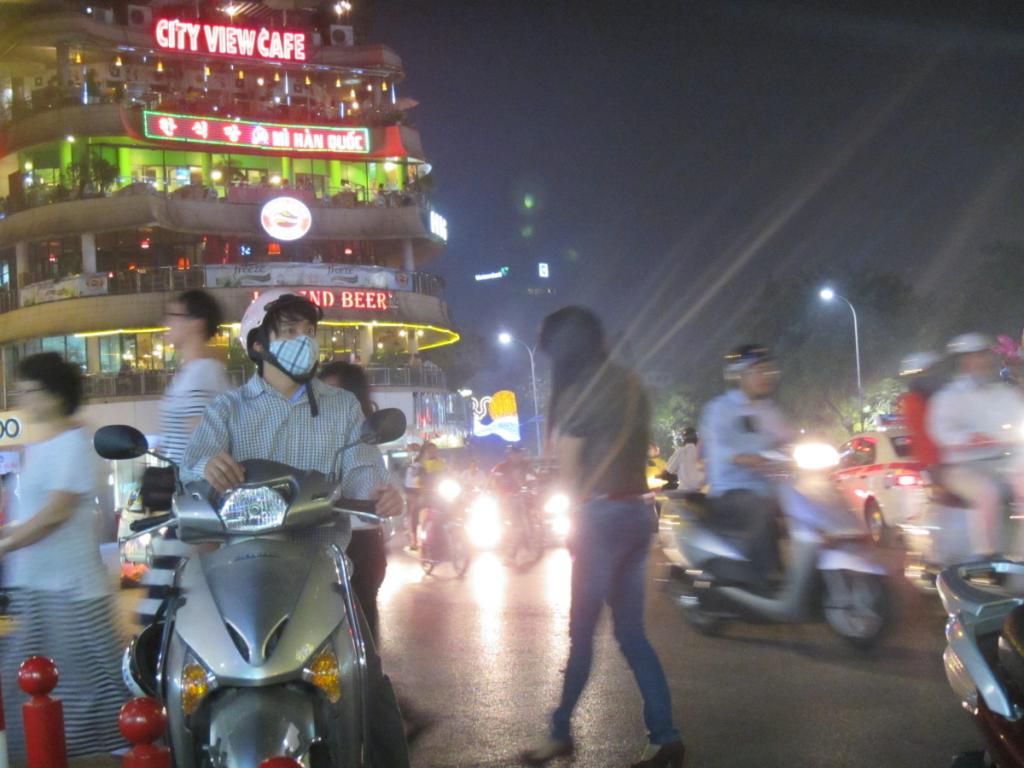
Back in Hanoi, we caught up with our family and made our long list of October 24th birthday calls to Brian's dad, Lauren's dad, and Lauren's sister. Hanoi is super smoggy, but the streets are filled with people going about their daily lives wearing face masks. Obviously, the highlight of Hanoi was the 25 cent beer. Every one sits along the street hanging out and drinking cheap beer... so of course we had to partake. There are over 3.5 million motorbikes in Hanoi. Life is just so plain chaotic its hard not to find it comical.

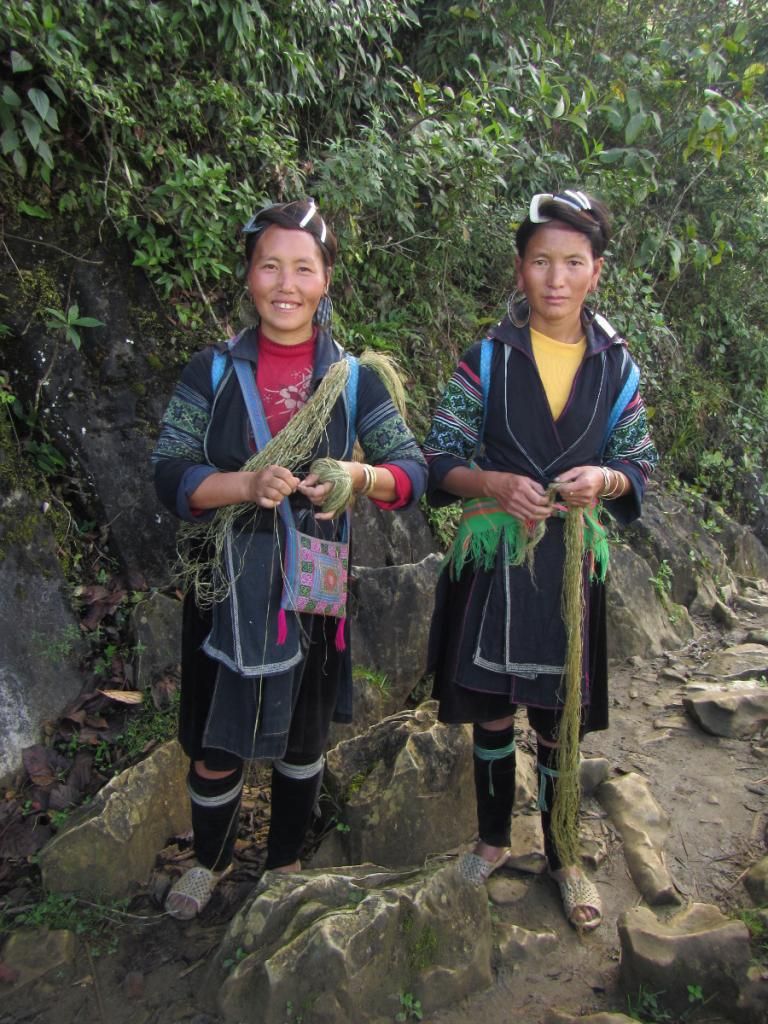
The highlight of our time in Vietnam was definitely the time we spent in Sapa and the “Tonkinese Alps.”. We heard great reviews from a friend about Sapa Sisters Trekking, a company locally owned by local Hmong (pronounced Mong) women living in the remote hill villages of Sapa. We stayed a night in a hotel in the main town of Sapa, which also offered to store our larger bag while we trekked in the countryside. Cho, our Sapa Sisters guide works once or twice a week, depending on how many tourists are in town and rotates with anywhere between 6-10 guides, all women.

Before leaving on the private trek, we sat down with Cho to go over our options. There are many small villages in the hills of Sapa and the trek routes have varying difficulties. With a little hesitation, we chose the most challenging route that led us up and down steep (and slippery!) sides of mountains. Navigating us up, down, and around the slopes, Cho scampered like a mountain goat. We managed to keep up with her and Lauren came very close to taking a tumble in a massive pile of buffalo poo. She slid about 5 feet and managed to stop still standing. Everyone got their laughs. See the picture to get yours... The views of mountains and rice terraces on our trek was breathtaking. Because of the altitude, the air was cool and the perfect temperature for days of walking.

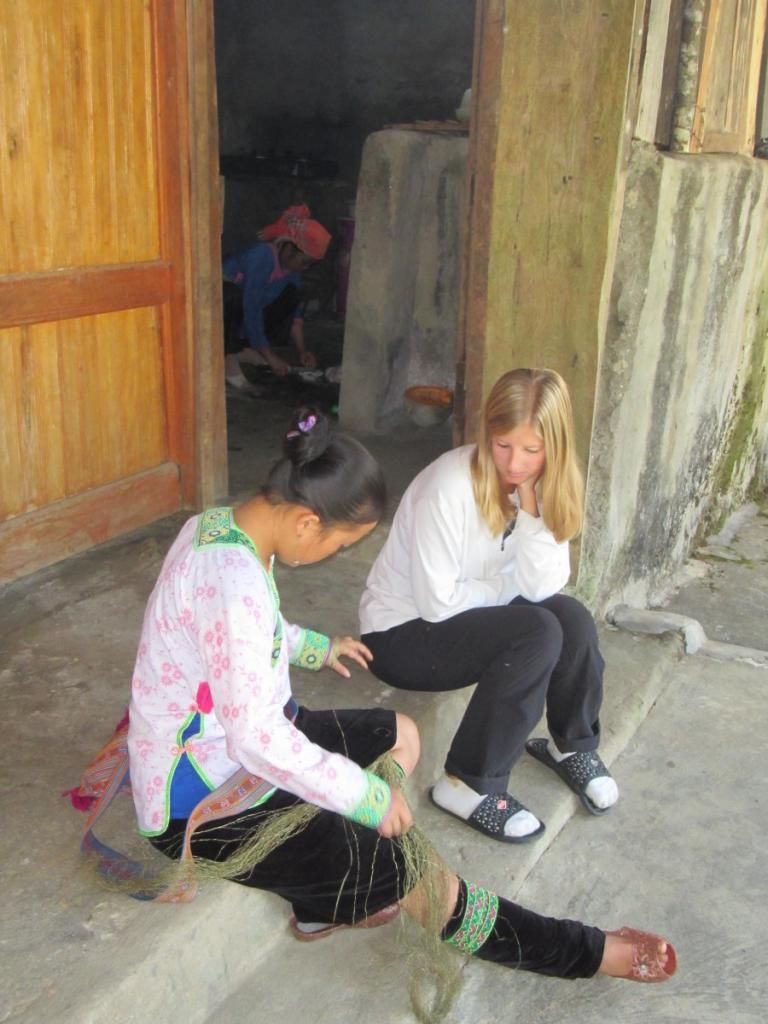
Cho, taught us about plants growing along the paths that are essential for medicine, food, and clothing in the Hmong Villages. She showed us which plants were poison and told us that it is common for women to eat poisonous leaves when they are not happy with their husbands. We had already noticed that the local women in the markets had blue hands and Cho showed that crushing the leaves of the indigo plants in our hands would leave a blue stain. Hmong clothing is made by twisting strands of hemp to create a thread and using a loom to weave. Marijuana plants are plentifully grown around the villages and are the primary material used for hemp textiles. The indigo leaves are crushed with water and used to create a navy blue dye. Traditional Hmong clothes have neon embroidery on the navy blue material. Patterns and designs are made on the fabric using beeswax before the dying process. After the cloth is dyed, it is put into boiling water and the wax is removed, leaving a white pattern on the indigo.

Like most Hmong, Cho spoke almost perfect English, but was unable to read or write. In the villages people speak Hmong, but also English and a little Vietnamese. Cho was 21 years old and already was married with a 2 year old girl and an 8 month old boy. It's not uncommon for people to marry young and have children. Responsibility to the family is a strong sentiment. When girls are married they move to the husband's family. The family is the center of life in Sapa's Hmong villages and many generations inhabit the same home. Cho told us how important it is to have sons because they marry and care for the elders of the family, while girls will eventually marry and leave the family. Husbands are very involved in cooking and cleaning and most of the women are the ones that have jobs outside the home. Men are greatly involved in supporting the women and raising children. All families grow rice at a minimum.

We were very lucky to have perfect weather for our days in the Hmong villages. Rain frequents the mountains this time of year and the steep slopes can be very slippery. During our trek, we stayed at a homestay in the hills that provided a bed, bathroom, shower, food, “happy water” and a valuable cultural experience. Our room in the homestay was a bed in a simple framed pen with a mosquito net. We befriended a group of American flight attendants who were also staying in the village between trekking. They had picked up a few souvenirs in the marajuana fields. In the evening we joined them at the little beer shop up and road. The non-existant menu was sparse, but included opium. We stuck to local beer.

While the flight attendants had their fun, we sat around drinking happy water and asked them about some of the weirdest thing they have seen on planes. We are recently coming off three straight plane rides in close proximity to crying babies. One of the girls told us a story about a man who had no arms and was flying in company of a service monkey. When it came time to eat the monkey started feeding the guy, as usual. But there was something wrong with the monkey and he was stuffing food into the guy's mouth faster than he could chew and scratching the man's face in the process. When the guy began choking, the flight attendants noticed the monkeys strange behavior, still stuffing food into the guy's mouth and clawing his face. One of the flight attendants grabbed the monkey by the neck and threw him into the restroom and locked the door. The monkey trashed around the first class restroom in panic. The pilots even hear the scuffle since the restroom shared a wall with the cockpit. Luckily a veterinarian that was on the plane suggested that the monkey was suffering from the pressure in the plane and needed oxygen. They got the monkey out of the restroom and gave him back to his owner with an oxygen mask and he acted normal the rest of the flight (as normal as service monkeys on a plane could act). It may have been the “happy water” but everyone got a huge kick out of the story, including the Hmong women. We just had to include it in the email since this is the most absurd story we have heard in almost a year of traveling.

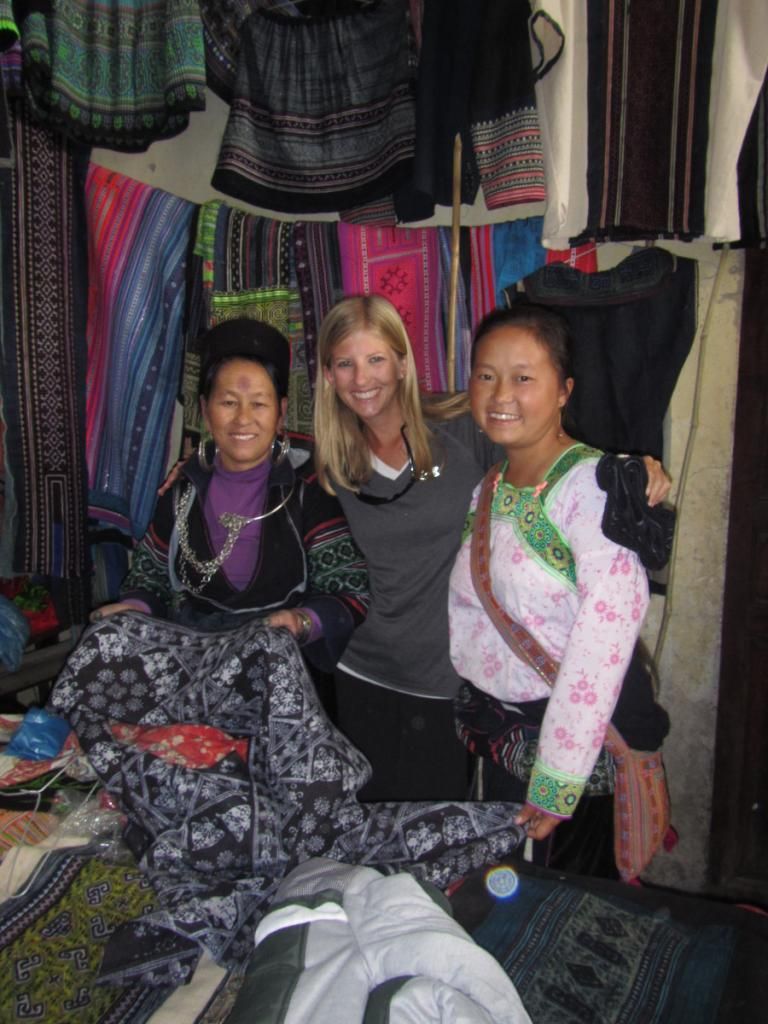
Returning to the main town of Sapa, was fun as we fast tracked through the hills on motorbikes with Cho, her husband, and their little baby boy. Cho took us to the market so we could buy a meter or two of indigo hemp fabric dyed with beeswax. Her mother owns a stand at the market, but was not there so we purchased from her neighbor.

Our adventure continues in Laos!


Wednesday, October 22, 2014

Vietnam (Part 1)

Crossing the border from Cambodia into Vietnam was uneventful. We choose to cross at the southern most crossing of Prek Chak/ Xa Xia and our bus driver took us right through. The border crossing is still developing and someday will look very different than it did for us. From the border crossing we went to Ha Tien and switched buses for Can Tho. The drive was pretty crazy and we saw life on the Mekong Delta bustling around us. The River is central to all parts of life in this part of Vietnam. 

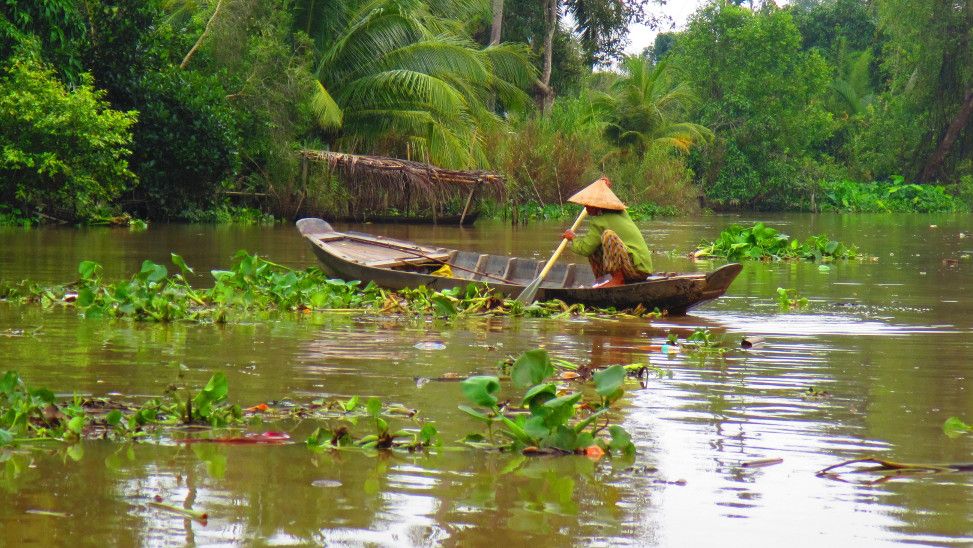
In Can Tho we jumped right into the Mekong River Delta... Literally. The entire town was flooded with a foot of water. If you thought the Neuse River or the Cuyahoga River was dirty, well then you would be shocked by the flooded Mekong River Delta during the rainy season. Aside from the fact that the River (especially during the wet season) is super contaminated with agricultural chemicals from the delta and waste, the River is an important part of life for the inhabitants of the Mekong River Delta. The Vietnamese use the river water for drinking, cooking, cleaning, bathing, and fishing. A little rowboat with a horizontal engine picked us up at 5:30 am for a boat trip to the floating markets. Vendors pile their boats high with produce and float down the river for a few days, selling everything before returning home upstream. Big sticks are hoisted in the air with their product attached so people know that they are selling from a distance. We also visited a family that makes rice noodles and learned about daily life in Vietnam. Our guide for the day had great English and turned out to be quite the botanist, introducing us to edible plants and herbs we had never heard of. On the menu that night was Duck BBQ, which was actually pretty good! The Vietnamese living on the Mekong Delta will eat just about anything and commonly raise dogs for food. Our hotel even had rat on the menu for 60,000 Dong (~$3). Ugh. Veggies only please! 

We took a bus to Ho Chi Mehn City and found a nice $15/night hotel that includes breakfast, wifi, and a cute Burberry bedspread. We spent about 30 seconds in the local market but were too overwhelmed by the caos to stay any longer. Ho Chi Mehn City is insane and, like Bangkok, is intriguing after you get past the deep breaths of smog. Lauren had her first meal of Ostrich BBQ and most of the time Brian stucks to veggie or pork friend rice. One thing is for sure, we are both ready for some Chipotle. Three days, let alone three weeks is not enough time to see Ho Chi Mehn City so we decided to divide and conquer to see the sites. 

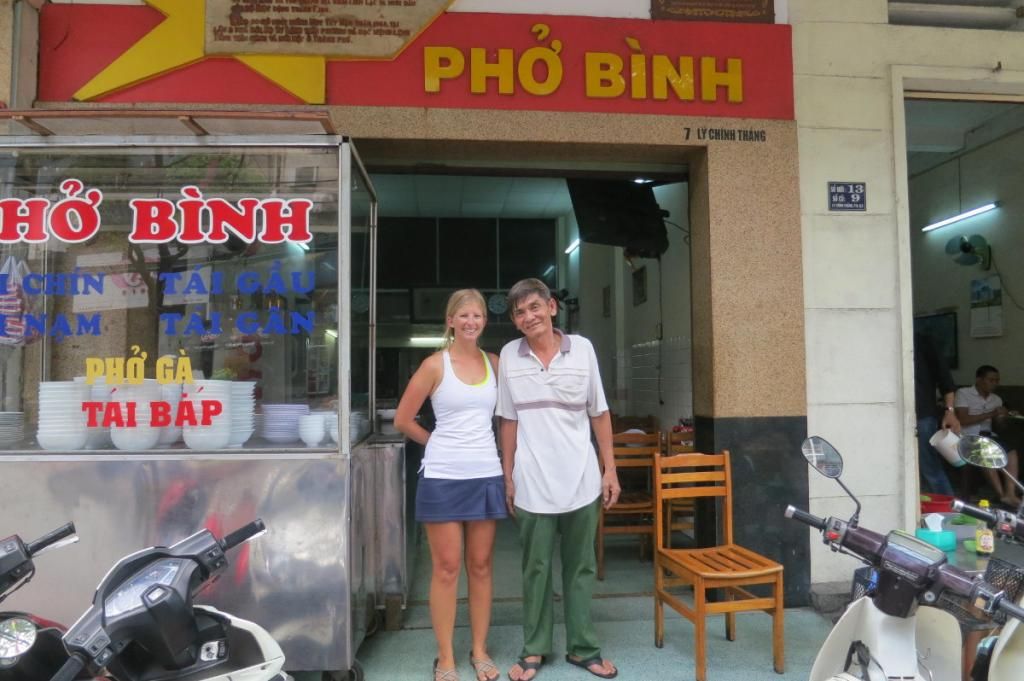
North Vietnam (backed by China and the Soviet Union) wanted to unify North and South Vietnman under communist control. The US was concerned about the domino effect in Southeast Asia that might lead to the entire continent being under communist reign. The US eventually pulled out and the North proceeded to take Saigon, now Ho Chi Mehn City. Lauren spent the day walking around the city to visit some lesser known historical stops including the Women's Museum, Pho Bihn (Viet Cong hang out), and Tan Dinh Catholic Church. The Women's Museum details the lives of women throughout history. Strong women, both physically and intellectually, have led Vietnam through some very unstable times.

Bihn Pho, is a restaurant, owned by the recently deceased, Ngo Van Toai. Here the Viet Cong served and American soldiers their renowned Pho, while planning the Tet Offensive in the upstairs room. The house is pretty intricate and has tunnels leading to it from various parts of the city for indiscriminate meetings. The soup hasn't changed at all since the war and is so delicious that the American's ate and ate while their counterparts planned an attack on the American Embassy. The family, who is now running the restaurant, was very proud to show Mr. Toai's many metals he received for his role in the Tet offensive. It was slightly awkward to see medals won for killing Americans. Family photo albums showing the restaurant's historic role offered insight into a time of turmoil.

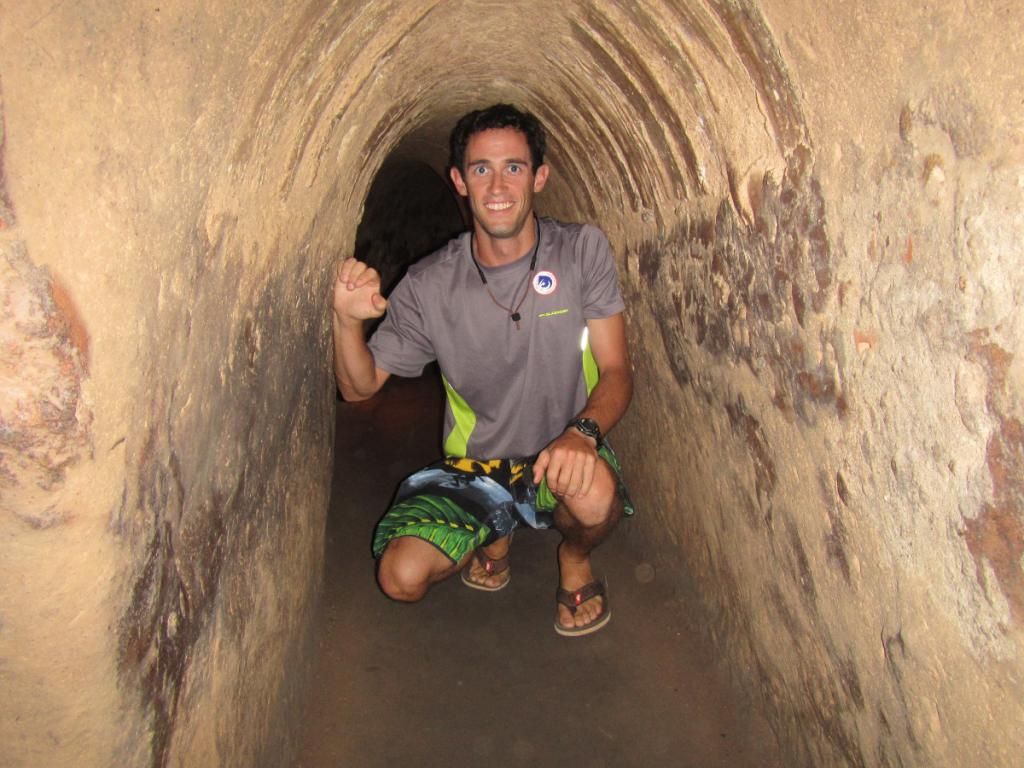
Brian spent the day crawling around Viet Cong tunnels. The design and expanse of the tunnel network was extremely impressive, and scary. I can't verify this but it seems there are two sizes of tunnels, one way or two way. One way provides enough room for a single (small) person to simply crawl while the two way allowed enough room for two people to pass or one person to turn around. Either way, one can only imagine how terrifying it must have been to be holed up in these tunnels while massive amounts of ordinance was being dropped overhead for extended periods of time. The tunnels were nearly self contained living quarters with hospitals, weapons caches, and kitchens. There were also subterranean assembly lines where the unexploded ordinance was collected and converted into grenades, mines, shovels or spikes to be used in traps.

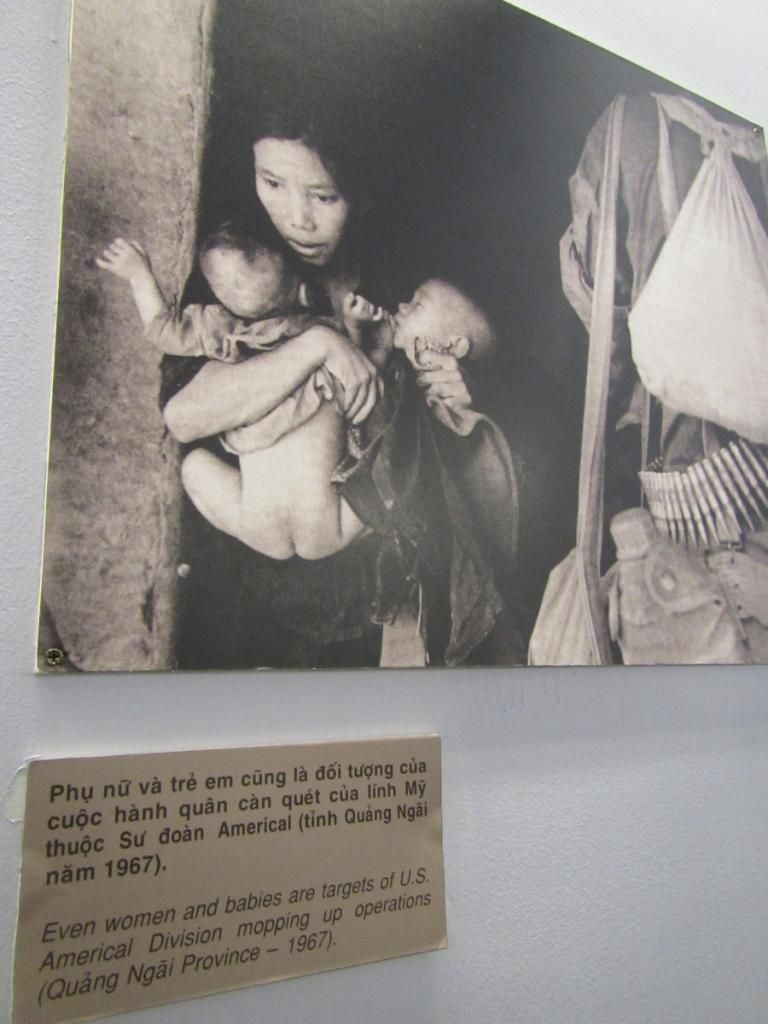
Together, we visited the War Remnants Museum, which houses items and photos of the Resistance War Against America or The War of American Aggression. Previously called the “Exhibition House for US and Puppet Crimes,” the name pretty much sums up the museum's anti-American sentiment. The museum had several exhibits titled “Historical Truths,” “Aggression and Atrocities,” and “Agent Orange Aftermath in the US Aggressive War.” Quotes from the American constitution are displayed on the wall next to photos of American's taking Viet Cong prisoners. This museum was absolutely not designed to give Americans warm and fuzzy feelings. Regardless of our opinions of the Vietnam War, we found some of the exhibits to be quite biased and distorted into anti-American history. Many of the displayed out of context images had detailed, graphic descriptions, while others just said “American soldiers killing women and children.” We went through every exhibit and didn't learn anything about the historical politics or causes of the war. Surprisingly there wasn't even a pro-North Vietnam sentiment... purely anti-American. Sheeesh. Bill Clinton was the first US President to visit Vietnam. We ordered pho at Pho2000 and sat at the same table that the President and Chelsea did in 2000. 

The one hour flights to Hoi An were too cheap to pass up ($40) so we decided to forgo the 22 hour bus ride ($22.) In Hoi An, Brian spent a day trying to get around the Vietnamese internet censorship so we could actually use our computer. We counted our blessings knowing that when we return to the Land of the Free we will be allowed to legally use Facebook.

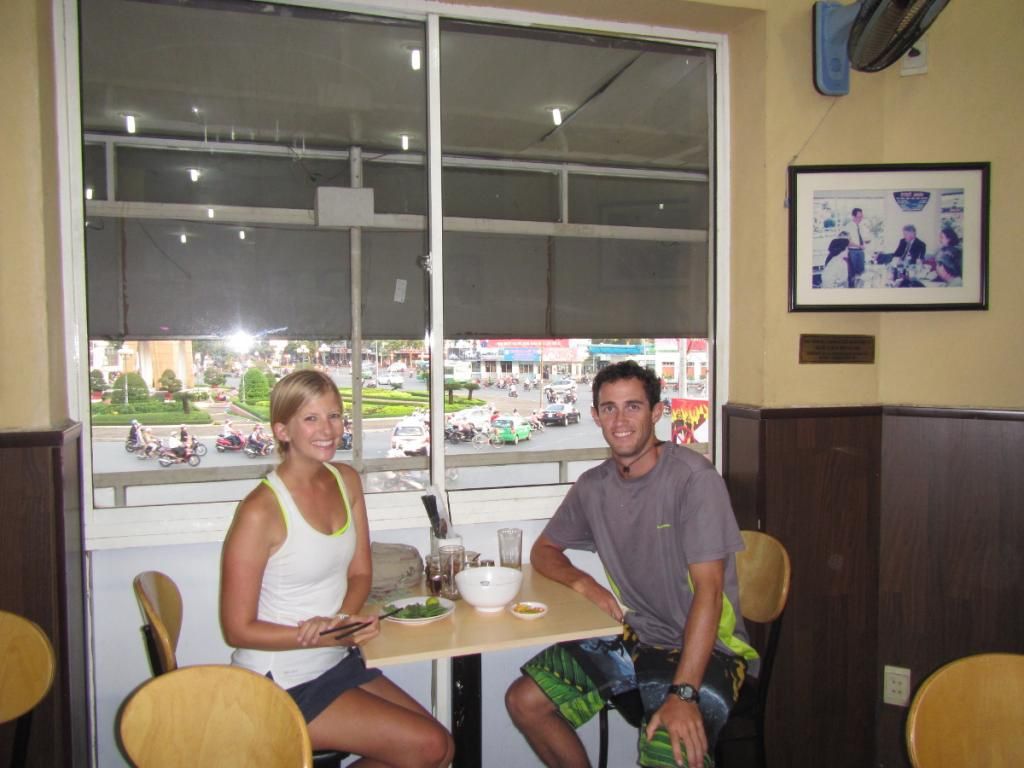
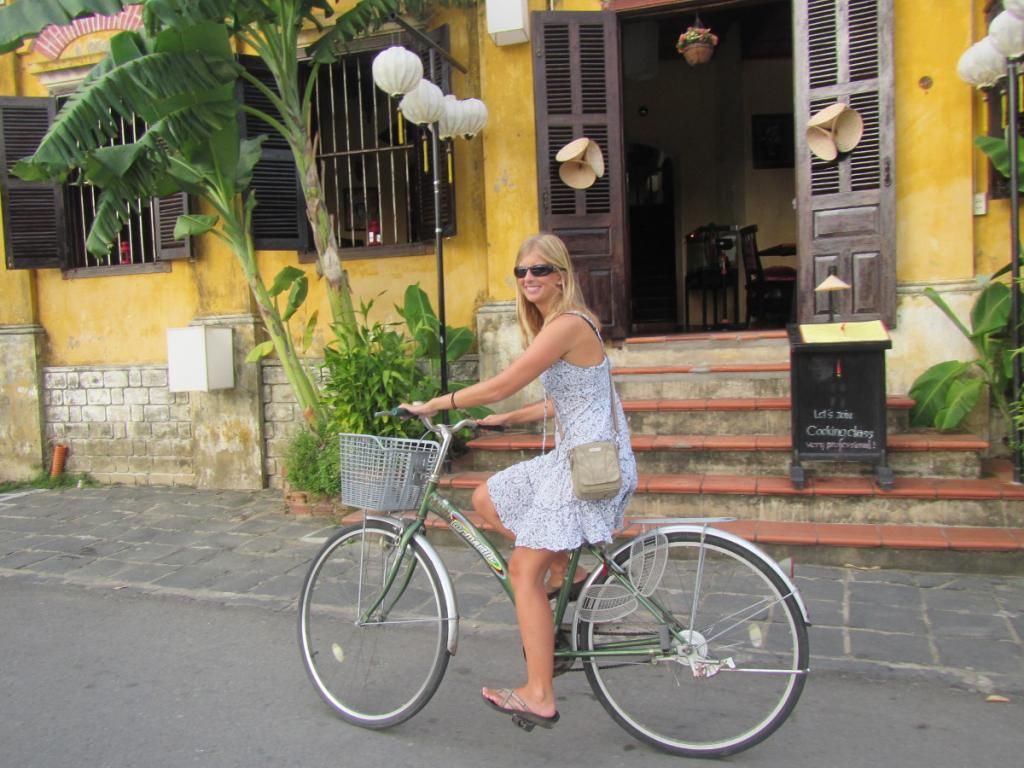
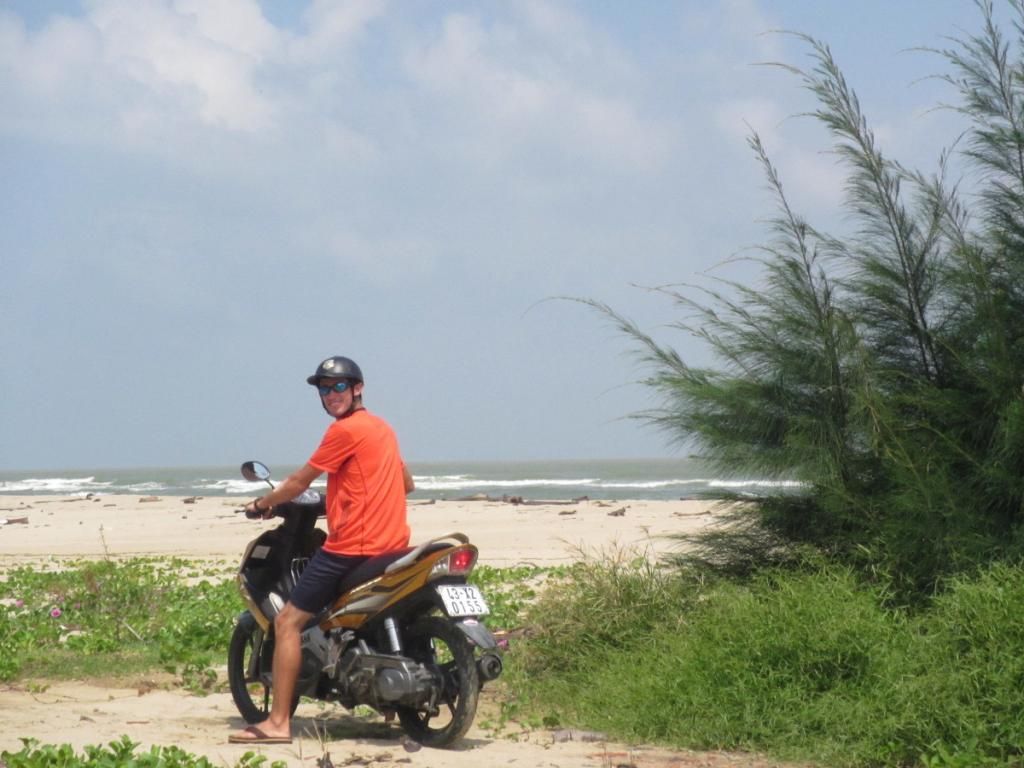
Our homestay, Flower Garden, was very nice and included a big breakfast and comfortable atmosphere. Hoi An is known for being an historical port village and also for their famous tailors. The Old Quarter is considered a World Heritage Site by UNSECO. Brian had a suit custom made. At the first fitting the pants were SUPER tight, but the lady eventually got it right. She said she was going for something “funky.” We kindly explained that Brian's potential employers might not appreciate the “funky-ness.” We rented bikes for a few days and a motorbike for a day. On the motorbike we scooted to the beach, a few kilometers away. The Old Quarter is closed to traffic and biking is a great way to see the lantern lit streets along the river. Beer was 25 cents, which made our stay in Hoi An affordable and fun! At night, lanterns and soft classical music give the town a majestic vibe. 

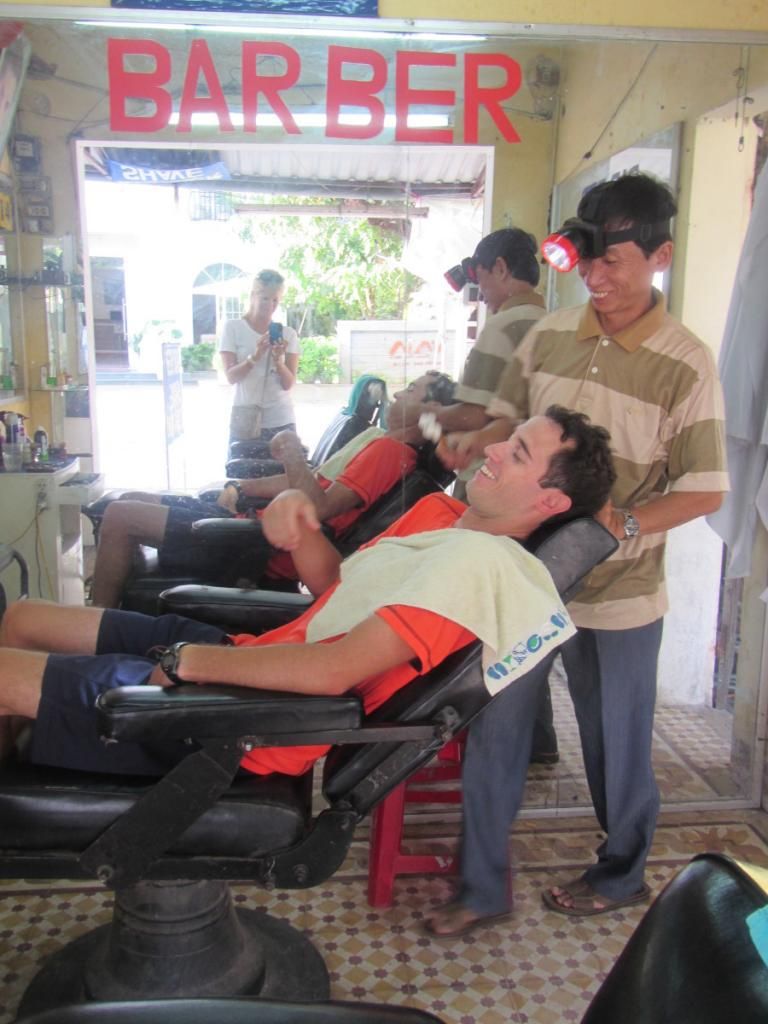
Walking down the street one afternoon, we stopped and asked a barber how much it would be to trim Brian's neck. He said he would do it for “no money” and Brian happily sat down in the chair. What happened from there is still confusing (and slightly traumatizing). This guy's shears were flying at 500 clips a minute, which was pretty terrifying. He opened a fresh razor blade and shaved Brian's neck, ears (inside and out), nose, and forehead. As Brian is sitting up, this little old Vietnamese guy pushes him back down and pulls out a wiry piece of metal, little brushes, and a headlamp and proceeds to pick earwax out of Brian's ears. This guy pretty much has a coat hanger two inches from Brian's brain. Apparently, he wouldn't take no for an answer. Lauren couldn't watch. Brian was cringing by the time the guy finally finished. We payed him a dollar, thanked him, and walked away feeling extremely traumatized. 

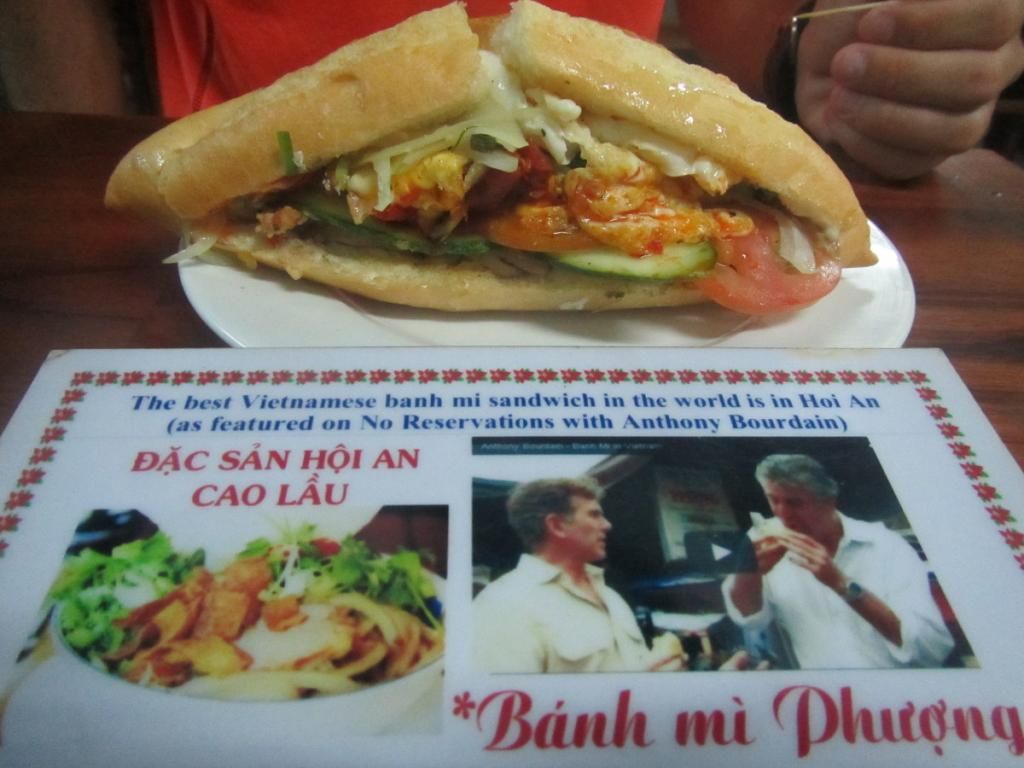
Our first night in Hoi An, we walked into a hole in the wall restaurant/street stand because it looked like they had fresh baguettes and it was dark and rainy. Much to our surprise, this street vendor had been visited by Anthony Bourdain's show, “No Reservations.” We tried a few different menu items (all baguette sandwiches) during our stay and all of them were delicious, with the exception of some strange pate thing. 

Asians, particularly the Vietnamese have a very interesting sense of hygiene. Everyone is hacking up crap and spitting it. People blow their nose without tissue and soap or paper in the restroom would just be way too much trouble. Hygiene is a definite afterthought. Like the rest of Asia, theres quite a bit of bargaining involved in getting a fair price. It was explained to Lauren in Ho Chi Menh City that there are 4 pricing scales (from lowest to highest): South Vietnamese prices, North Vietnamese prices, Foreigner prices, and American prices. The people in Vietnam are fairly receptive to Americans visiting their country, but they plan on taking as much of your money as possible while you are here. We wouldn't say Vietnam has been the most welcoming of places. The younger generation seems much more friendly than the older generation. Students stopped us several times wanting to practice their English. 

Our Vietnam adventure continues North to Ha Long Bay, Hanoi, and Sapa. 


Monday, October 13, 2014

Cambodia (Part 2)

From Phnom Penh, we took a long rainy bus ride south to Sinhanoukville and transferred to a tuk-tuk for a short ride to Otres Beach. We met an English couple on the bus, Amber and Ben, and decided to head to the same bungalows on Otres Beach. While we are sure the White Sands Bungalows are just fantastic when the weather is good, it kept raining and raining all day and all night.  October is Cambodia's rainiest month, but rain usually rolls in during the early evening after clear days. Otres beach is undeveloped with the exception of shack bungalows and open air cafes along the beach. The rain usually wouldn't have deterred us, but the thatch roof bungalows were soaking wet. The generator was out most of our stay, which also meant the water pumps were not working. No power. No water in the sink or toilet...ugh. The place next to us had beach dorm beds in a pavilion (also the bar)... Picture a few cots on the beach. We were fascinated by the bug identification chart that hung next to the beds. Luckily our place was a little more private, more substantial. We stayed one night and enjoyed the delicious included breakfast with Amber and Ben while getting soaked under a straw umbrella. So much for our Cambodian beach week. Otres Beach has great views, a beach that stretches for miles, and lots of cool beach bars which are probably rockin with good weather. The little Cambodian children were not phased by the rain and spent the day playing in the waves while it poured.

Rolling with the punches we got a last minute bus to anywhere, but here... which turned out to be our favorite stop in Cambodia, Kampot! Even better, Amber and Ben came along! We got a room above a bakery called “Kampot Pie & Ice Cream Palace.” Lauren saw a solitary review of the place online and insisted that we check it out. I mean... what's better than a pie and ice cream palace!? Our little “palace” had three nice rooms for $6, $7 and $8 per night. It is the low season and none of the rooms were occupied. We are all just amazed with the comforts and homeyness of our accommodation. The smell of breakfast, bread, and pastries coming through our window in the morning can't even be put into words. Ben had three slices of different pies for breakfast this morning. The staff is very friendly and we have not felt this “at home” since Amed in Bali. 

We rented a motor bike for 2 days ($5/day) to explore the countryside. The first day we scooted up to Bokor Mountain National Park. The park is home to ruins of a Catholic Church and Bokor Palace Hotel, which a has beautiful view of the Gulf of Thailand. The station was built as a place for the French to escape the Cambodian heat. It was abandoned during the Indochina War and abandoned once again for good during the Cambodian Civil War. We went on a little trek in search of a waterfall, but only found a small one. Later we learned that sticking to the trails is advised because there are tigers on the mountain. Oops. That was probably written on one of the many signs we can't read. Little ponds scatter the area and are known as “American Ponds,” which are really where American bombs were dropped and the depressions were eventually filled with water. I'm sure the Cambodians are thrilled with the generous geographic alterations provided by the Americans. The second day scooting we visited a pepper farm in the countryside. It's weird to say, but the pepper on the food in Kampot is really really good and locally grown. It is renowned world wide for being high quality pepper. Black, red, white, and green pepper come from the same plant. No chemicals, pesticides needed and every peppercorn is picked by hand. Our next stop was at at the caves of Phnom Sorseha. The caves are crawling with kids and many of them offered to show us around and in turn practice their English. Later that day, Brian found a coin with a hole in it, which is a sign of luck. 5 minutes later he was walking and the sidewalk caved in. No injuries but lucky coin was swiftly discarded.

We've eaten quite a bit of Cambodian food and like all of the noodle dishes, red soup, and amok. Fresh coconuts are 50 cents and sold on the street throughout town. Besides the Kampot Pie and Ice Cream Palace (where we lived) we enjoyed meals at Street Pizza (literally $3 pizza made on the street by a happy Italian) and Epic Arts (staffed by deaf and disabled Cambodians.) It seems like every family owns a dog in Kampot. During the day dogs are pets, but at night owners put them outside the house as guard dogs. Well the night guard dogs have formed packs and get into trouble all night.

Next stop Vietnam!


Wednesday, October 8, 2014

Cambodia (Part 1)

The train ride from Bangkok to the border was comfortable and it was nice to see the Thai countryside from the open air windows. We hopped off the train into a Tuk-Tuk to take us the remaining 3 kilometers to the border. Entering Cambodia via land is a widely known nightmare. We did extensive research to make things go smoother, but of coarse identified new issues. Visa scams are everywhere approaching Cambodia and bus and tour scams line the streets, especially on the Thai side. When we finally found the official place to get our Cambodian Visa, we learned that the price had been increased from $20 to $35. This went into effect October 1st... the same day we were crossing the border. Cambodians use Riel and the US dollar, but everyone wants US dollars so reil bills are only really used for small change under $1 US. Anyway, we didn't have enough dollars to pay the new fee. So we are stamped out of Thailand, but not into Cambodia in this limbo (ATM-less) zone. Brian walked around for an hour trying to find more money, only to find people that wanted to take his money. The only businesses in limbo were casinos, but they had no ATMs. I half expected Brian to gamble with our dollars to get enough for us to cross the border. In the end a casino manager recommended that Brian simply walk a quarter of a mile into Cambodia, use the ATM and come back. So Brian walks without a passport, without identification through the Cambodian border to the ATM and back across the border... no questions asked. We were able to pay for our Visas, legally cross into Cambodia and catch a bus to Siem Reap. The bus ride was terrifying, as Cambodia's roads are in really bad shape. It didn't help that our driver stopped for a few 8% beers on the way. 

We only spent 2 nights in Siem Reap, since the areas main attraction is Angkor Wat. It's not uncommon for people to buy a week long pass to visit the temples of Angkor Wat, but we bought a 1 day pass and were satisfied with out visit. Built in the 12th century, Angkor Wat is the largest religious monument in the world and was originally Hindu, but is now Buddhist. Some of the temples are being devoured by large trees. Various parts have been restored, while other remain in their historic toppling state. Large sandstone bricks were transported 25 miles to the site of Angkor Wat. The temples were first discovered by the western world when a French botanist discovered them deep in the jungle. 

During our 2 nights in Siem Reap we noticed that there were amputees everywhere. Sitting at lunch we were discussing what that could be when a land mine victim came up to us selling books about Cambodia's land mine problems. There are about 50,000 amputees in Cambodia. Most mines were laid during the Civil War in the 1970's and up to 6 million land mines are still buried in Cambodia's rural areas. Men working in fields and children playing in the countryside are the most common victims. 

Avoiding another crazy bus ride, we paid a little extra money to take the best night bus service in Cambodia to the city capital, Phnom Penh. The sleeper bus was pretty comfortable and we only woke up once to severe bumpy road conditions. I think our comfort levels are skewed after 8 months sleeping on rocking sailboats. 

Visiting the Killing Fields of Choeung Ek was an eye opening experience. From 1974-1979, Cambodia's communist party, the Khmer Rouge, was responsible for the deaths of over 3 million Cambodians. Before the Khmer Rouge's reign the population of Cambodia was 8 million. The political party was a peasant party and main targets for execution were city dwellers, professionals, monks, ethnic minorities, foreigners, proponents of a free market system and any intellectuals. Ironically, the leaders of the Khmer Rouge were very educated, mostly by French universities. City populations in Cambodia were at an all time high since rural dwellers feared for their safety when bombs were being dropped in Vietnam and Cambodia, targeting the Viet Cong. The Khmer Rouge required all cities in Cambodia to be evacuated and their residents sent to designated sites in the country side to join the peasants in hard labor, essentially slave labor, to increase Cambodia's productivity. Conditions were deplorable and families were separated, since citizens' primary allegiance was to be to the state. Men, women, and children alike spent 12-15 hours a day working as groups in the fields and faced frequent starvation.

Formally an orchard, the Choeng Ek Killing Field is now a mix of shallow pits (excavated mass grave sites) and mounds (unexcavated mass grave sites.) A Buddhist Stupa was built near the entry of the fields an now holds more than 8,000 skulls of victims. Murders at Choeng Ek were extremely violent and bullets were valued and seldom used. Women, children, and even babies were violently killed. The Khmer Rouge believe that if a man was executed, it was important that the family also be killed to prevent a generation of resentment and revenge. Because of the rainy season, it is common for material to surface from the mass graves. Pieces of clothing, teeth, and both small and large bones are scattered around the site. We were very impressed with the 2 hour audio tour that was included in our admission fee. 

Before being brought to Choeung Ek for execution, prisoners were held at S-21, a high school converted to torture prison. The facility is now the Tuol Sieng Museum. Khmer Rough leaders kept meticulous records and photos of prisoners as they arrived at the camp. These haunting “mug shots” are now displayed at the museum in the form of rows and rows of photos. When the Vietnamese liberated Phnom Penh (1979), there were only 7 survivors still at the prison. Two of those survivors were at the museum selling and signing books about their survival stories. 

Experiencing the Tuol Sieng Museum and Choeung Ek was fairly overwhelming. It's difficult to comprehend that almost a quarter of the country was so brutally murdered just 35 years ago. Phnom Penh has done an excellent job rebuilding and striving to honor the lost generation that once called the city their home. 

We roamed around the Central Market and Night Market eating Cambodian treats with the locals. Brian wouldn't eat the fried grasshopper, but Lauren ate a squid with a cucumber piece inside. Cambodia has great noodles mixed with vegetables, iced coffee, and fresh fruit juices. After the night market, we had our favorite 50 cent beers on the river and watched lights go by.

The recent civil war and genocide hangs a dark cloud over Cambodia buthe people are very friendly, light hearted, and optimistic. From Phnom Penh we traveled to the Cambodian coast... Update to come in Cambodia Part 2!